Monitor Hearing Health and Protect Employees From Noise-Related Hearing Loss
Audiograms evaluate an employee’s hearing ability over time, helping employers detect early signs of noise-induced hearing loss. Regular testing is essential for maintaining OSHA compliance and ensuring the long-term health and safety of workers exposed to hazardous noise levels.
Audiograms are standardized hearing tests that assess how well an employee can hear tones at various pitches and volumes. They serve as a key component of OSHA’s Hearing Conservation Program, identifying changes in hearing that may result from occupational noise exposure.
These tests allow employers to intervene as soon as possible, and ensure employees receive proper hearing protection and follow-up care.
Who Needs This Test?
Audiograms are required for employees who:
Are exposed to an 8-hour time-weighted average (TWA) noise level of 85 dBA or higher
Are exposed to 140 dBA or higher impacts/impulses for any amount of time
Work in loud environments such as manufacturing, construction, warehousing, fabrication, maintenance, transportation, or energy operations
Participate in a Hearing Conservation Program
Use hearing protection as part of their job
New hires entering high-noise environments also require baseline audiograms.
How It Works
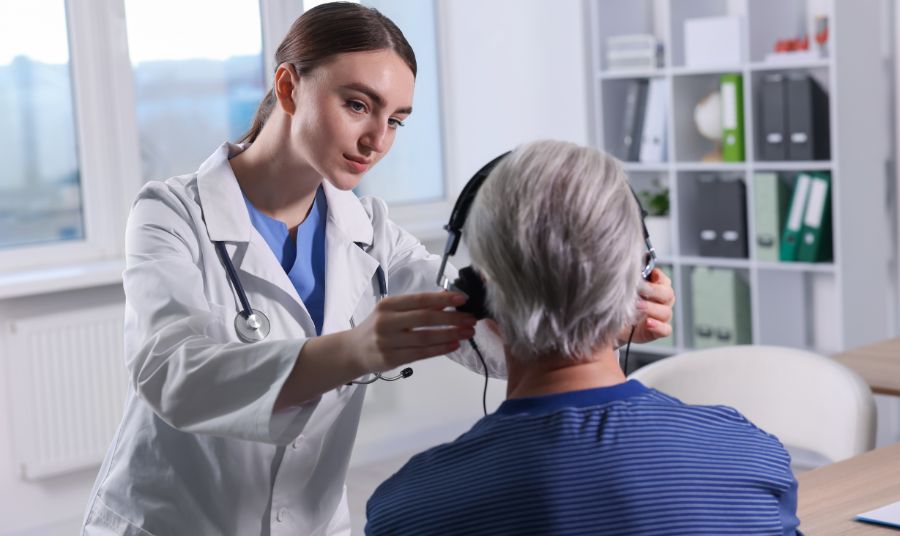
Audiogram testing using the WAHTS system is efficient and does not require a sound booth or mobile truck:
The employee listens to tones at different frequencies and volumes.
The device records the softest sounds the employee can hear.
Results are compared to baseline or previous tests.
Reports identify any changes, including OSHA-defined Standard Threshold Shifts (STS).
Testing is available on-site at your workplace or at our OccuMed facility.